
Are Locks Getting Worse? A 5-year trend report on hardware reliability in the UK

The Hardware Reliability Myth
A door lock can still work and already be failing. That may sound contradicting, but our analysis of more that 130,000 locksmith repair jobs between 2020 and 2025 shows a consistent pattern: 59.2% of locksmith service calls across the UK involve locks that technically still work, but have become stiff, sticky, or difficult to operate.
For many homeowners, the problem begins subtly. The key takes a little more effort to turn. A door handle feels slightly stiff. The lock catches occasionally, or the door needs to be pushed or pulled before the mechanism will engage properly. Because the lock still works, it is easy to ignore. But these early warning signs can indicate developing mechanical problems. Left untreated, a relatively straightforward repair can become a complete lock failure, a replacement, or an emergency callout.
Our five-year analysis found that annual lock failure rates have remained consistent, sitting between 14% and 17% from 2020 to 2025. In other words, locks have not become significantly more reliable over this period. The issue is not necessarily that modern locks are getting worse. Instead, homeowners increasingly expect security hardware to function indefinitely without maintenance, while modern multipoint locking systems contain more moving components and mechanisms that can suffer from wear and tear, alignment issues, and mechanical fatigue. The result is a reactive approach to household security. An action is taken when the lock stops working, rather than when it first starts showing signs of trouble.
5 Year Reliability Trend Data
Our findings show that there has been no significant downward trend in mechanical lock failures. Annual failure rates have remained within the 14%-17% range, demonstrating a persistent level of mechanical failure across a 5-year period. Mechanical lock failure itself represents an average of 16.15% of annual national locksmith callouts. Meanwhile, lock repair and faults account for 39.64% of total locksmith service volume nationwide. These figures show that lock problems remain a significant and recurring issue for many households.
Modern locking systems have brought many security benefits. Multipoint locking systems, euro cylinder mechanisms, and other British standard hardware can provide improved protection and functionality compared to older deigns. However, increased functionality also means having increased mechanical complexity. A multipoint system may contain several interconnected components working together every time a door is used. Over time, components can experience wear, while changes in alignment can increase the force required to operate the mechanism. However, a lock does not need to be old to develop problems. It simply needs to experience enough use, movement, resistance, or neglect for problems to develop. Which is why early signs matter.
The Lifecycle of Lock Failure
Most serious lock failures do not happen without warning. 54% of repair jobs begin as ‘problems operating’, this includes stiff handles, resistance when turning a key, and crunchy or difficult locking movements. The progression from an early warning sign t6o complete lock failure can therefore be viewed in three different stages.
The Warning
At first the lock still operates, but it no longer feels completely normal. At this point, the underlying issue may still be straightforward to resolve. The average cost associated with this stage is around £140.20, with 92% of these locks are repairable without requiring new parts. This is where preventative action can make the biggest difference. The lock is giving you a warning, but it has not yet reached the point of failure.
The Failure
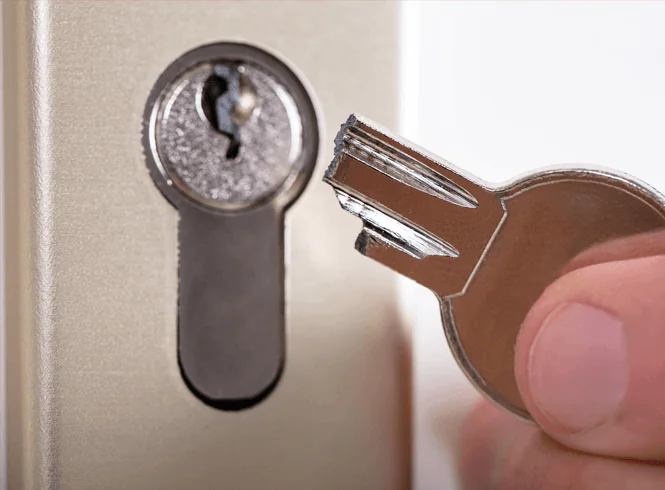
If warning signs are ignored, then the problem can progress. The mechanism can seize, they key can become stuck, or the key itself may snap inside of the lock. Snapped keys account for around 3.5% to 6% of emergency jobs, demonstrating how a small operating problem can develop into an urgent situation. At this stage the average cost rises to £184.60, with 65% of cases requiring a replacement part. What could have previously been addressed as an early mechanical problem may now require new components or a replacement locking mechanism.
The Crisis
This is where the is a complete mechanical failure. The lock becomes completely unresponsive, and the homeowner may find themselves unable to open or secure the door. This can result in a total lockout, particularly when a gearbox or multi point mechanism breaks while the door is closed. The average cost at this stage rise to £210.40 or more, with an 85% replacement rate and the potential for additional out of hours emergency fees. This is the point at which the cost of procrastination becomes the most apparent.
Door Vulnerabilities
Not all doors and locking mechanisms experience wear in the same way. Our data shows significant differences between common door types and mechanisms.
uPVC Doors
uPVC doors account 59% of all wear and tear repair calls and 47% of total locksmith interventions. Of uPVC service requests 52% involve operating difficulty. This is primarily associated with issues including gearbox wear and changed in door frame alignment. The complexity of modern multipoint locking systems means that several locking points need to operate correctly for the door to function smoothly. Even small changes in alignment can affect the amount of force needed to operate the lock. A homeowner may notice that the handle has become harder to lift, the key is increasingly resistant, or the door needs to be pulled into position before it locks. These are not problems to ignore.
Wooden Doors
Wooden doors represent 22% of repairs. Unlike uPVC doors, wooden doors experience a higher proportion of complete unlock failures, at 24%. One contributing factor to this is the natural movement of wood. Changes in temperature and humidity can cause timber to expand or contract, affecting the relationship between the door, frame, and locking mechanism. Traditional mortice latch mechanisms can also become susceptible to binding when alignment changes.
Preventative Maintenance
The good news is that homeowners can investigate several warning signs before a lock reaches the point of failure.
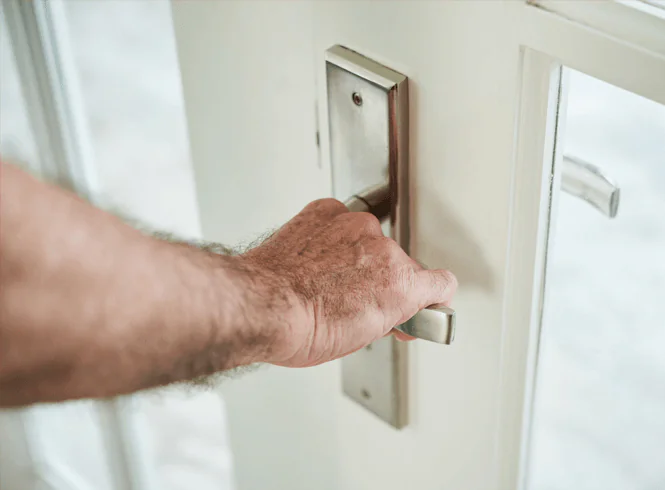
One of the simplest checks someone can do is the open-door test to compare how the lock operates when the door is completely open and when it is closed. Just open the door and operate the handle and locking mechanism to check if the door is running smoothly. If this is the case but becomes stiff or difficult when the door is closed, then this can indicate an alignment issue between the door and frame rather than a problem with the lock itself. If the door remains stiff when the door is open, then the locking hardware itself may require attention. This simple test can help distinguish between a mechanical lock problem and a door alignment problem.
It can be tempting to reach for a standard lubricant when a lock becomes stiff. However, products like WD-40 are not appropriate for lock cylinders. They can attract debris and overtime contribute to accelerated wear. Making sure you are using the appropriate product for the specific locking mechanism is important. If you are unsure what your lock requires, professional advice can help prevent creating another problem.

Becki Hooper
Becki is a seasoned home security specialist and the Marketing Manager at Keytek, one of the UK’s leading locksmith companies. With over a decade of hands-on experience in the locksmith and security industry, she offers trusted guidance on everything from upgrading to high-security locks to selecting the best home protection systems.
A graduate of Winchester University, Becki blends academic insight with practical expertise to empower homeowners with reliable, up-to-date security advice.