

Is WD40 Safe for Door Locks?
In a Hurry? Here's the Key Info
- Standard WD-40 is not recommended for door locks
- It can remove existing lubrication and attract dirt, making locks stick over time
- Use a dry lock lubricant or graphite powder instead
- WD-40 Silicone or specialist lock lubricants are safer alternatives
Is WD40 Good for Door Locks?
Using WD-40 in a door lock may seem like a quick fix for a stiff or sticking mechanism, but it can often create bigger problems over time. WD-40 is primarily a water-displacing spray rather than a dedicated lock lubricant, and its oily residue can attract dust, dirt, and debris inside the lock. As the WD-40 builds up, the internal components can become clogged, causing the lock to operate less smoothly and increasing wear on pins, springs, and other moving parts. In some cases, this can lead to keys becoming difficult to turn, getting stuck in the lock, or even snapping under pressure.
The cost of using WD-40 can be significant if it contributes to lock failure. A key that becomes jammed or breaks inside the lock may require professional extraction, while a damaged mechanism could need repair or complete replacement. Locksmith call-outs and lock-related repairs can quickly add up, with broken key removal often costing upwards of £100. What starts as an inexpensive DIY solution can therefore result in an avoidable locksmith bill, making a specialist lock lubricant a far more cost-effective choice in the long run.
Specific products like WD40 Gel Lube No Drip Formula and WD40 Silicone can be used on locks and have much better results.
What is WD40?
Water Displacement 40th Formula (WD40) is a multi-purpose product used for a variety of different things. From removing rust, loosening fasteners and lubrication, you can use it on just about everything.
Uses of WD40
- Lubrication (squeaky hinges, sticky drawers, wheels)
- Cleaning (Remove grime, grease, scuffs)
- Rust prevention (Protect metal surfaces from rust and corrosion)
- Unsticking (Loosing stiff items)
So, Can You Use WD40 For Door Locks?
The short answer: no, you shouldn’t use standard WD40 on locks.
Many people try using WD40 on locks to loosen them when they get stuck, since it works as a lubricant for many things. But standard WD40 actually does the opposite.
WD40 strips a lock of its natural lubricant and can make your lock stiffer or even sticky. Likewise, it can attract dust and dirt into your locking mechanism and lock which will affect how your lock works.
Top Locksmith Tip: Use a lock lubricant instead of WD40 to help with stiff or sticky door locks.
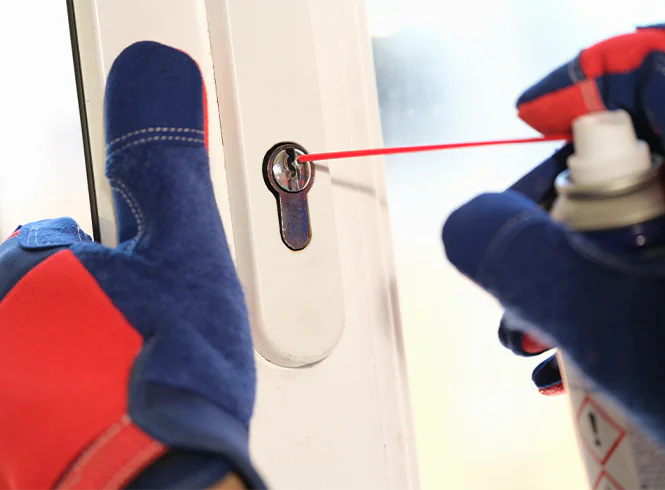
WD-40 vs Proper Lock Lubricants
Feature / Effect | Standard WD-40 | WD-40 Silicone | WD-40 Gel Lube | 3-IN-ONE Lock Dry Lube | Houdini Lock Lube | GT85 |
Safe for door locks? | No | Yes | Yes | Yes | Yes | Yes (but not best) |
Attracts dust/dirt | High | Low | Low | Very low | Very low | Low |
Removes natural lock lubricant | Yes | No | No | No | No | No |
Risk of gumming/ stickiness | High | Low | Low | Very low | Very low | Low |
Best use case | Rust removal / general lubrication | Hinges, locks, light lubrication | Precision, no-drip lock use | Best for locks | High-performance lock lubrication | Cleaning + light lock lubrication |
Locksmith recommended? | No | Sometimes | Sometimes | Yes | Yes | With caution |
The Best Lubricators For Locks
3-IN-ONE Lock Dry Lube
A locksmith favourite for it’s quick drying formula that doesn’t attract dirt or grime, which will help prevent the lock from gumming (getting sticky). It comes with a attachable straw which helps to make application more precise.
Houdini Lock Lube
Dry and synthetic, this spray helps prevent common issues like staining or gumming. Also safe for electrical components, it’s a versatile lubricant for many things, including locks.
GT85
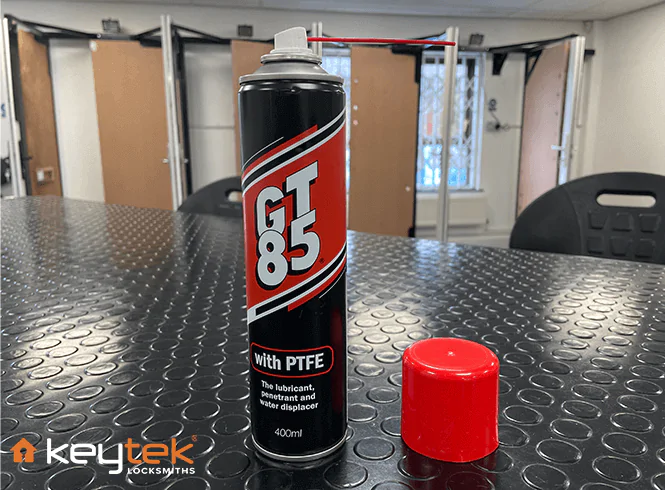
GT85 is often used to clean and lubricate locks. Its PTFE content helps protect against rust and corrosion, and is an effective solution to stiff or sticky locks.
Is GT85 Good For Locks?
GT85 is effective for many applications, including lubricating locks. However it’s worth noting that there are more effective lubricants for locks, which is why it ranks third on our list of lock lubricants.
How to Apply a Lock Lubricant Properly
- Clean the lock: using a soft cloth or compressed air, remove any surface dirt or dust from the keyhole.
- Spray the lubricant: insert the nozzle of your lock lubricant into the keyway and give it a short burst.
- Insert the key: push the key in and out of the lock. This helps to distribute the lubricant throughout the lock.
- Turn the key: Rotate the key back and forth gently to make sure the lubricant has reached the moving parts.
- Wipe away the excess: if any lubricant leaks out of the keyhole, wipe it away with a clean cloth.
Lock Lubricants & When to Use Them
Lubricant Type | Pros | Cons | Best For | Not Ideal For | Application Tips |
Dry PTFE / Teflon (3-IN-ONE Dry Lube, GT85) | Doesn’t attract dust, long-lasting, smooth action | Not as deep-penetrating as liquid lubes | Everyday lock maintenance | Extremely corroded locks | Clean keyhole first; apply short burst |
Synthetic Lock Lubricants (Houdini) | Professional grade, no staining, safe on electronics | Slightly pricier | Car locks, uPVC doors, precision locks | Very old, dirty locks | Apply then work key in/out |
Silicone Spray (WD-40 Silicone) | Clean, water resistant | Not as effective as dry PTFE for lock internals | Exterior locks exposed to rain | Fine mechanical locks | Spray lightly; avoid overuse |
Graphite Powder | Excellent dry lubricant, dirt-repellent | Messy, stains, poor in damp conditions | Traditional pin-tumbler locks | Modern electronic or uPVC locks | Dip key, insert repeatedly |
Standard WD-40 | Good cleaner, frees rusted parts | Attracts dirt, removes lube, gums mechanism | Rust removal only | All door locks | Avoid unless cleaning before re-lubrication |
Graphite Powder
You can use graphite powder to lubricate a lock if you prefer. Just dip your key into the graphite powder to coat it. Then, slide it in and out of the keyway to lubricate the lock.
How Often Should You Lubricate Your Door Locks?
We recommend you lubricate and oil your locks every 1 to 3 months. This helps to keep them in good working order, which can help prevent other issues.
Door Lock Problems: Symptoms, Causes and Fixes
Problem | Symptom | Likely Cause | Best Fix |
Stiff key | Key hard to turn | Dirt or poor lubrication | Apply lock lubricant |
Key Stuck | Key won't come out | Debris or worn key | Lubricate or replace key |
Broken Key | Key snaps in lock | Wear or excessive force | Remove key or call locksmith |
Lock Won't Turn | Key won't rotate | Faulty or seized lock | Lubricate or replace lock |
Loose Handle | Handle wobbles | Loose screws | Tighten fixings |
Door Won't Latch | Door won't stay shut | Misalignment | Adjust strike plate |
Frozen Lock | Lock won't operate | Ice build-up | Use lock de-icer |
Jammed Lock | Lock sticks regularly | Dirt or WD-40 residue | Clean and lubricate |
Won't Unlock | Key turns but door stays locked | Internal failure | Repair or replace lock |
Hard to Lock | Needs force to lock | Door or lock misalignment | Realign door or lock |
Loosening a Stiff Door Lock
A stiff door lock can be frustrating, but there are safe ways to fix it without causing long-term damage. If your door keeps sticking or won’t open, it may mean there is a bigger problem. In this case, it’s best to consult a professional locksmith. In the meantime, you can try these simple methods:
- Use graphite power to ease movement of the lock mechanism
- Lubricate the lock to restore smooth operation.
Top Locksmith Tip: Always clean your lock first before applying lubricant or graphite powder to ensure the best results.
Quick Answers: What You Can and Can’t Use on Door Locks
Question | Answer | Why |
Can you use standard WD-40 in locks? | No | Attracts dirt, removes lubricant |
Can you use WD-40 Silicone? | Yes | Doesn’t attract dirt |
Can you use GT85? | Yes (3rd best) | PTFE-based, light clean |
Best lubricant for locks? | 3-IN-ONE Dry Lube | Designed for lock internals |
In Conclusion
- Standard WD‑40: Not recommended — can strip lubrication and attract dirt.
- Lock‑specific lubricants: Best option for smooth, long‑lasting operation.
- Silicone or gel versions: Better than standard WD‑40, but still not ideal.
Keeping door locks properly lubricated with the right product helps prevent key binding, protects internal pins and springs, and keeps your lock working smoothly year after year a small step that goes a long way for home security.
- Additional Home Security Ideas UK
- Avocet High Security
- Beach Hut Security Tips
- Burglary Deterrents and Home Security: How to Deter Burglars in the UK
- Holiday Security Tips
- How to Lock Door Without a Key
- Our Guide to Festival Security
- Should I Lock My Door at Night?
- Summer Home Security Guide
- What Is Cylinder Snapping and How to Prevent It?
- What Is Distraction Burglary and How to Prevent It?
- Winter Home Security Tips
- Your Guide to British Standard Compliance and Quality
- Your Neighbourhood Watch





Jim Lockwood
Jim Lockwood is a fully qualified locksmith with over 10 years of hands-on experience in domestic, commercial, and emergency locksmith services across the UK. Holding a Level 4 NCFE Locksmithing accreditation—Jim is a trusted authority in lock security, key systems, and burglary prevention. As Keytek’s lead technical content specialist, Jim draws on real-world experience to create detailed, trustworthy resources that help homeowners, tenants, and professionals make informed decisions about their security. From guiding readers through emergency lockout procedures to explaining locksmith pricing, his content combines expert knowledge with practical, easy-to-follow advice. Throughout his career, Jim has tackled a wide range of locksmithing scenarios—including uPVC door lock failures, snapped keys in locks, and high-security upgrades and remains actively engaged in the locksmith industry, staying up to date on emerging technologies, British Standards, and security legislation. This ensures that every guide, article, and tutorial he authors is not only accurate and actionable but also aligned with the latest best practices.
Frequently Asked Questions
Is WD40 a Degreaser of Lubricant?
WD-40 is a lubricant—specifically, fish oil—that has dissolved in a solvent. While it can reduce grease and oil to some extent, it also contributes some back.
Can You Use WD40 In Door Locks?
Do not use WD-40 in your door locks. It’s a solvent that removes lubricants in the lock cylinder. This can make your lock dry and more likely to stick.
Does WD40 Unfreeze Locks?
WD40 can help to unfreeze locks as it displaces the water but we do not recommend doing this. A short term fix can bring about long term problems by attracting dirt and gumming up the lock.
For the best advice on how to stop your locks from freezing, read our blog.
Can You Use WD40 on Wooden Doors?
WD40 is safe to use on wood, so the technical answer is yes. However, you still won’t be able to use it on the metal door lock attached the wooden door. You can use WD40 to remove scuff marks from your wooden door. After using WD40, wipe down the door with a damp cloth.
Can You Use WD40 on a UPVC Door?
WD40 can be used on a UPVC door? We suggest only using WD40 to remove marks and scuff or to wipe clean any rubber seals your UPVC doors might have. You will need to wipe your UPVC door down with a damp cloth after using WD40. You should not use it on any of the metal lock components or when trying to fix a uPVC door mechanism.
Why is WD-40 Bad for Locks?
WD-40 is an oil-based product that can leave residue inside the lock, attracting dust and debris that interfere with smooth operation.
Can WD-40 Damage a Lock?
WD-40 doesn’t usually cause immediate damage, but repeated use can lead to long-term problems by clogging internal components.
Keytek locksmiths can help with locks affected by incorrect lubrication