

Keytek’s Guide to the Different Types of Locks
In a Hurry? Here's the Key Info
- There are 7 main door lock types: mortice locks, nightlatches, rim cylinders, euro cylinders, multi-point locks, security bolts, and padlocks/camlocks
- The best lock depends on your door type (e.g. mortice locks for wooden doors, euro cylinders with multi-point locks for uPVC doors)
- British Standard locks (e.g. BS3621 or TS007 3-star) provide the highest security and often meet insurance requirements
- Combining locks (like a 5-lever mortice + nightlatch) offers stronger protection
- Choosing the right lock improves home security and burglary resistance
With so many different types of locks on the market, it’s hard to choose which door lock type is best for you. Understanding the main types of locks and where to use them in your home can be confusing, which is why we’ve created our door lock guide to help you understand what you may need or what your locksmith has fitted.
The Different Types of Door Locks
There are 7 different types of locks with each having different qualities and purposes, due to this they also have different price points.
This guide runs through each of the different types of door locks and the pros and cons of each.
Lock type | Best for | Security level | Key required? | BS3621 approved | Typical cost | Difficulty to replace |
Mortice locks | Traditional timber doors | High | Yes, both sides | Yes | £35-£65+ | Medium |
Night latches | Home front doors | Medium/High | Yes, only outside | Some models | £30-£110 | Easy |
Rim cylinder | Wooden doors | Low/Medium | Yes | No | £15-£45 | Easy |
Euro cylinders | Any external doors | Medium/High | Yes | Some models | £25-£95+ | Easy |
Key operated multi-point locking system | uPVC, composite doors, metal/ aluminium | High | Yes | Depends on door system | £100-£400+ | Difficult |
Security bolts | Side or back doors, French doors, internally | Low/Medium | Yes/No | No | £10-£45 | Medium |
Smart locks | Modern homes | Medium | No | No | £100-£350+ | Difficult |
How to Identify your Lock Type
Not sure what type of lock you have on your door? Identifying your lock is usually easier than you might think. The type of door you have, where the lock is fitted, and how it operated can all help you work out which lock you’re looking out.
uPVC and composite doors normally use euro cylinder with a multi-point locking system, while wooden doors are more likely to have a mortice lock or night latch.
If the lock is mounted on the surface inside of the door, it is likely to be a night latch. If it’s fitted within the edge of the door, it is usually a mortice lock or part of a multi-point locking system.
If you need to life the handle before turning the key, you most likely have a multi-point locking system. If the door locks automatically when it closes, it’s likely to be a night latch.
If you’re still unsure give us a call and we’ll be happy to help.
What are the Most Secure Types of Lock?
Lock type | Security rating | BS3621 approved | Anti snap | Anti pick | Anti drill | Insurance accepted | Best use case |
Mortice locks | Low/High | Yes | n/a | Yes | Yes | Some | Wooden doors |
Night latches | Low/ Medium | Some models | n/a | No | No | Some | Secondary lock |
Rim cylinder | Low/ Medium | No | No | Some | Some | n/a | Wooden doors |
Euro cylinders | Medium/ High | Some models | Some | Some | Some | Some | uPVC, composite, wooden, metal/aluminium |
Key operated multi-point locking system | High | Depends on door system | n/a | n/a | n/a | Yes | uPVC, composite, wooden, metal/aluminium |
Security bolts | Medium | No | n/a | No | No | n/a | Side or back doors, French doors, internally |
Smart locks | Medium | No | No | Depends if it has a manual override cylinder and the type of the cylinder | Depends if it has a manual override cylinder and the type of the cylinder | No | Modern homes with keyless access |
British Standard Locks
British standard locks are tested to meet recognised security standards designed to help protect your home against forced entry. Many home insurance providers require external doors to be fitted with a British standard lock, meaning that it’s worth checking your policy to ensure that your locks meet the required level of security.
Identifying a British standard lock is easy, just check for the BS kitemark stamped on the faceplate or body of the lock.
Insurance Approved Lock Types
Not all locks are equal, meaning that if you are not meeting the standards of your insurance company, your policy could be voided in the event on a break in. Most insurers in the UK require British standards rated locks. Using certified locks improves home security and can even lower premiums by reducing your risk profile.
If you’re unsure if your locks meet insurance requirements, check your policy or get in contact with us today, we’re happy to help.
The Best Lock for Doors
Different lock types used in homes will depend on what you want the lock to do. You wouldn’t put a bathroom lock on a front door and vice versa. You should also consider if your home has any special requirements for the locks
Front door locks
The front door is the main entrance point to a home, therefore needing to have a high security lock in place.
The most secure lock for wooden doors is a deadbolt door lock.
The most secure lock for uPVC doors and composite doors would be a 5 lever multi point locking mechanism.
Back door locks
Due to being an external door, back doors use the same high security locks as front doors in most cases. However, some people may opt for a thumb turn lock as it provides a quick escape without the need for a key, which is particularly useful in an emergency. In some cases, thumb turn locks are required due to fire regulations.
Internal door locks
For internal doors that require a lock, i.e., the bathroom door, a thumb turn is generally used for ease. In some instances, a simple mortice can also be used.
What is a Mortice Lock?
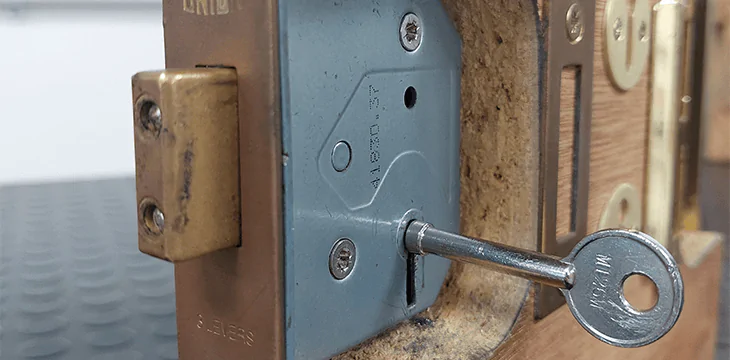
Also known as a deadlock, mortice locks are very common and are usually found on a wooden door with a key being required to operate.
These locks are fitted into a recess within the door, so they sit flush with the edge. When the key is turned, it operates a lever mechanism that extends a bolt into the keep, which is fitted into the door frame to secure the door.
Advantages of mortice locks
Mortice locks offer several advantages, including strong security, adaptability, affordability, insurance compliance, and convenient key options. They can be harder to force open than some cylindrical alternatives, while their wide range of sizes means they can be fitted to most suitable doors with ease. Their straightforward design also makes them relatively easy to replace, repair, fit, and maintain. When a British Standard mortice lock is used, it can help ensure the home meets the minimum requirements of many insurance policies, and mortice locks can also be keyed alike for added convenience.
Disadvantages of Mortice Locks
Mortice locks do have some disadvantages. They do not offer an automatic locking option, so the door must be manually locked with a key. If the lock is not British Standard approved, it may make the home less secure and could breach the requirements of a home insurance policy. Mortice locks also have installation limits, as they cannot be fitted to doors with a thickness lower than 35mm.
Mortice Lock Types
There are 2 different mortice lock types that can be used, both having a varying level of security.
3 Lever Mortice Lock
3-lever mortice locks are cheaper than their 5-lever counterpart and are great for securing internal doors or outdoor sheds. They cannot be used for front doors as they have less levers which increases the risks of key duplication and are not British Standard as it does not have high enough security to pass the prerequisites to be British Standard approved.
5 Lever Mortice Lock
The five-lever mortice lock is a great choice for most external doors as they are extremely secure and are usually approved by home insurance companies. Ensure your 5-lever mortice is British Standard approved.
The Most Popular Mortice Lock Brands
There are several brands which have excellent British Standard approved mortice locks:
Sash Lock vs Mortice Dead Lock
The difference between a deadlock and a sash lock is the use of a handle. A deadbolt has no latch and is key operated, whereas a sash lock has a sprung latch keeping the door locked without being locked.
Operations
Operations | Deadlock | Sashlock |
Handle | No | Yes |
Spring latch | No | Yes |
Must be locked to close | Yes | No |
Can be closed without locking | No | Yes |
Mortice deadlock
Operable with a key only, a deadlock is more secure as the door locks when it is pulled shut behind you but increases the chance of being locked out.
Mortice slash lock
A sash lock operates with a lock (and key), latch and handle mechanism. You can fully open and close the door without needing a key each time preventing being locked out and they are available in varying security levels.
You could argue dead locks are more secure as you cannot forget to lock it, however a key is needed to deadbolt it to fully secure the door.

Nightlatches
Nightlatches are a door lock type commonly referred to as Yale Locks’. Nightlatches are known as secondary locks and are often found accompanying a mortice lock.
A nightlatch sits higher up on the door, around shoulder height, it automatically locks the door when it is closed. The locking feature on this mechanism allows for the latch within the lock to be locked internally. This means the external cylinder is rendered useless once locked internally, offering an extra layer of protection when paired with a mortice lock.
Types of Nightlatches
Standard Night Latch (Yale Locks)
This is the most basic type of door lock of nightlatches and offers minimal security. With this model you will still get the automatic locking and use of the internal snib feature that allows you to either lock or hold back the latch. This type is often found on communal doors where automatic locking is needed but doesn’t lock a person inside.
Deadlocking Night Latch (Yale Locks)
This lock automatically locks when the door closes and can only be opened again with a key.
Auto-Deadlocking Night Latch (Yale Locks)
The security of the nightlatch increases at this lock type as the nightlatch will automatically deadlock the latch when closed. Once deadlocked, a key must be used to unlock the nightlatch. This lock type also has the additional feature of an anti-thrust latch, meaning that when engaged it will stop the latch from being slipped open.
Double Locking Night Latch (Yale Locks)
One of the most secure nightlatches that you can have, this type of door lock has the added feature of an internal key meaning that you can lock the internal handle for extra security. These nightlatches are approved by British Standard BS3621 and BS8621.

Rim Cylinder
A classic pin tumbler design housing a series of different length pins that secure the lock in place. When the key is inserted, it aligns all the pins allowing them to turn, activating the lock to open. The rim cylinder is often used as an external operating system for the nightlatch.
Advantages of rim cylinder
Rim cylinders offer several advantages, including improved security, affordability, and variety. They can be upgraded to British Standard models, helping to increase security and meet the minimum standards required by many insurance policies. A rim cylinder can also be changed easily without affecting the night latch, which can save both time and money. In addition, rim cylinders are available in different finishes, making it easier to match them with the rest of your door hardware for a cohesive look.
Disadvantages of rim cylinder
Rim cylinders do have some disadvantages. On their own, they do not provide enough security and should always be used alongside a mortice lock for better protection. If the rim cylinder is not British Standard approved, it may also be easier to pick, which can reduce the overall security of the door.
Euro Cylinder Locks
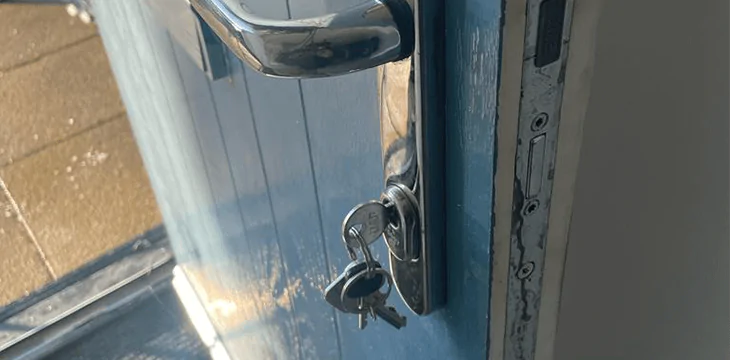
Euro cylinder locks are another common type of lock found on front doors and are often seen on uPVC doors and composite doors, typically working in conjunction with a multi-point locking system. This cylinder uses a pin-and-tumbler mechanism, where a key aligns the internal pins to allow the lock to turn. If you’re replacing or upgrading your lock, our uPVC Window and Door Specialists can help. You can also check out our guide on how to change a uPVC door lock cylinder for step-by-step advice.
Types of Euro Cylinders
Single Cylinder
Operates from one side only, making it suitable for internal doors where no external key is required.
Double Cylinder
Double cylinders are one of the most commonly used euro cylinder lock types. They have keyed access on both sides, allowing the door to be locked and unlocked from either side while preventing it from being opened without a key.
Thumb Turn Euro Cylinder
This is a key operated lock that requires a key on one side and a thumb turn on the other. Used in residential properties where quick access may be needed in an emergency without the worry of where your key is. A thumb turn lock is also useful for privacy reasons like in a bathroom.
Advantages of a Euro Cylinder
Euro cylinders are easy to replace because you can change the cylinder without replacing the whole multi-point locking system. They are available in different security levels, with some models designed to protect against lock snapping, drilling, and picking. They are also ideal for commercial properties, as several cylinders can be set to work with the same key. For added convenience, euro cylinders can be fitted with an internal thumb turn, making them easy to lock and unlock from inside. They can also be upgraded to a higher-security cylinder at any time without changing the entire lock.
Disadvantages of a Euro Cylinder
Euro cylinders can be vulnerable to a burglary technique known as lock snapping, where an intruder attempts to break the cylinder to gain access to the property. Choosing a high-security, anti-snap euro cylinder can help reduce this risk and improve the security of your home.

Key Operated Multi-Point Locking System
These are the most common locks used on a uPVC door. There is a minimum of 3 locking points but can go up to 5, which all lock simultaneously when the mechanism is engaged by pulling the door handle up and locking the door with the key. The more locking points the more secure the door.
Advantages of multi locking system
Security is enhanced by connecting uPVC door locks to the door frame through multiple locking points, making it significantly more difficult to force the door open. The greater the number of locking points, the higher the level of resistance against forced entry. The system is also easy to use, as only a single cylinder is required to engage all locking points simultaneously, allowing the door to be locked quickly and conveniently. In addition, these locks can be keyed alike with other cylinder locks throughout the property, reducing the number of keys required and enabling multiple doors to be operated with a single key.
Disadvantages of multi locking system
Although multi-point locking systems are generally reliable and provide a high level of security, all the locking points must engage correctly for the door to lock properly, meaning the mechanism relies on every component working simultaneously. As the locking mechanism is integrated into the uPVC door, it can also be more complex and expensive to repair or replace if it becomes damaged or wears out. In addition, new multi-point locking systems can initially feel stiff, requiring extra force to lift the handle and engage all the locking points until the mechanism has been used regularly.

Key-Operated Security Bolts
Security bolts are suitable for wooden doors and perfect for back doors. They provide additional home security and can be operated from inside.
Advantages of key operated security bolts
They can be easily fitted onto a door to provide extra security.
Disadvantages of key operated security bolts
There is limited access control, once a key has been lost or stolen it can be duplicated and used for unauthorised access.
Smart Door Locks
An electronic locking system that allows you to lock and unlock the door using digital methods, i.e., your phone. They allow you to manage the access to your property remotely from anywhere so that you can monitor who is entering and leaving your house.

Find your nearest Locksmith

Frequently Asked Questions
What is the Difference Between a Sashlock and a Deadlock?
The difference between a deadlock and a sash lock is the use of a handle. A deadlock is thought to be more secure as it automatically locks but you still need to use the key to fully deadbolt it to the door for it to be fully secure.
How Do I Know if my Mortice Lock is British Standard?
Check the faceplate of your lock and check for the BSI kitemark or for the BS3621 mark.
What Type of Lock Do I Have?
Your lock type depends on the door you have. Wooden doors usually have a mortice lock and/or a nightlatch with a rim cylinder. uPVC or composite doors have multi-point locking systems with a euro cylinder lock.
Check out our guide on what to do when your uPVC Door or Window won’t open!
Can I Install a Lock Myself?
While some locks like padlocks or basic nightlatches are DIY-friendly, external door locks that affect home security are best installed by a professional locksmith, such as a Keytek locksmith, to ensure maximum security and insurance compliance.
Do I Need to Upgrade my Locks to Meet Insurance Requirements?
Many insurance providers require external door locks to meet certain standards like BS3621 or TS007 3-star rating. It’s always best to check your policy and upgrade if needed, both for compliance and security.
How Often Should I Replace my Locks?
You should consider replacing your locks every 5–7 years or sooner if they show signs of wear, if keys are lost, or after moving into a new home.
What is a Mortice Lock?
Fitted inside of a wooden door and offers a strong level of security for external doors
What are the uPVC Door Lock Types?
The most common lock used on uPVC doors are multi point locking systems with euro cylinder locks, including anti snap and thumb turn options.
What are the External Door Lock Types?
Popular options include mortice locks, deadbolts, nightlatches, multipoint locks, rim cylinders, and smart locks
What are the 7 Types of Door Locks?
Mortice locks, deadbolts, night latches, multi-point locks, Euro cylinder locks, rim locks, and smart locks.
What are the Different Key Types?
Common key types include Yale keys, mortice keys, dimple keys, laser-cut keys, tubular keys, and smart or RFID keys.