

The Ultimate Guide to Garden Fence Security
Protecting your home starts at the perimeter. A garden fence is more than just a boundary—it’s a vital security layer that can prevent burglars from accessing your property. Combined with gates, sheds, lighting, and smart devices, your garden can become a strong deterrent to intruders. This guide covers everything from barbed wire fences to garden security tips, so you can make your garden safer while complying with legal requirements.
Key Topics Covered:
- Choosing the best fence material for security
- Legal limits for garden fences
- Anti-climb solutions and spikes for fences
- Security lighting and motion sensors
- FAQs on garden fence security
Why Garden Fence Security Matters
Gardens are often dark, hidden spaces that burglars can exploit to access your home. Effective garden security begins with a robust fence, but also includes:
- Secure gates
- Well-maintained sheds
- Motion-activated lighting
- Clear sightlines from the house
Even a tall, strong fence may be vulnerable if other security measures are ignored. Combining multiple layers of protection is the most effective deterrent.

Understanding How Thieves Target Your Garden
To improve your garden security, consider it from a burglar’s perspective. Ask yourself:
- Are there any easy points of access?
- Are valuables visible, such as tools or bicycles?
- Are there hidden areas where someone could break in unnoticed?
- Can someone easily climb over fences?
Identifying weaknesses allows you to reinforce your garden effectively.
Legal Requirements for Garden Fences
- Most fences up to 2m tall do not require planning permission
- Check local restrictions, especially if bordering highways
- Verify fence ownership in property deeds to avoid disputes
- Any shared fence or trellis requires neighbour consent
Choosing the Best Fence Material
Fence Material | Durability | Cost | Security Level | Maintenance | Key Benefits | Anti-Climb / Wire Compatibility |
Cedar Wood | Medium-High (20–30 years) | Medium-High | High | Moderate | Rot- and decay-resistant; weatherproof | Can support security spikes; barbed wire possible |
Cypress Wood | Very High (30+ years) | High | High | Low | Extremely durable; weather resistant | Can support spikes; thorny plants effective |
Redwood | High (25–35 years) | High | High | Low-Moderate | Insect-repellent; durable | Can support barbed or anti-climb wire |
Galvanised Steel | Very High (40+ years) | Medium | Very High | Low | Hard to cut; ornamental or chain-link | Ideal for barbed wire, razor wire |
Vinyl | Medium-High (20–30 years) | Medium-High | High | Very Low | Weatherproof, hard to scale | Supports spikes; barbed wire possible |
Composite | Very High (30+ years) | High | Very High | Low | Durable and low-maintenance | Can integrate spikes or anti-climb paint |
Bamboo | Low-Medium (10–20 years) | Low-Medium | Medium | Moderate | Affordable, visually appealing | Limited compatibility with barbed wire |
Fence Height & Climbing Deterrence
The right fence height combined with deterrents makes climbing difficult for intruders.
Rear Garden Fence:
- Install fencing at least 1.8m high (check planning requirements)
- Place panels close to the ground to prevent crawling underneath
- Keep horizontal bracing inside and chamfered to reduce climbing aids
- Secure panels to posts with brackets or screws
- Regularly inspect and repair any damage or rot
Front Garden Fence:
- Recommended height: ≤1m for visibility and compliance
- Low fences help define property boundaries but avoid obstructing sightlines
- High fences may obstruct sightlines and reduce security benefits
Additional Tips:
- Chamfer horizontal bracing inside panels to reduce climbing handholds
- Secure panels firmly to posts using brackets or screws
Enhancing Garden Fence Security
Adding security features can significantly improve your fence’s deterrence:
Anti-Climb Paint
- Thick, non-drying paint applied to prevent climbing
- Requires signage to warn children and visitors
- Legal on private property within safety regulations
Security Spikes
- Often made of steel or durable plastic
- Can deter climbing while complying with local laws
- Works best on tall fences
Find out more about Garden Fence Spikes.
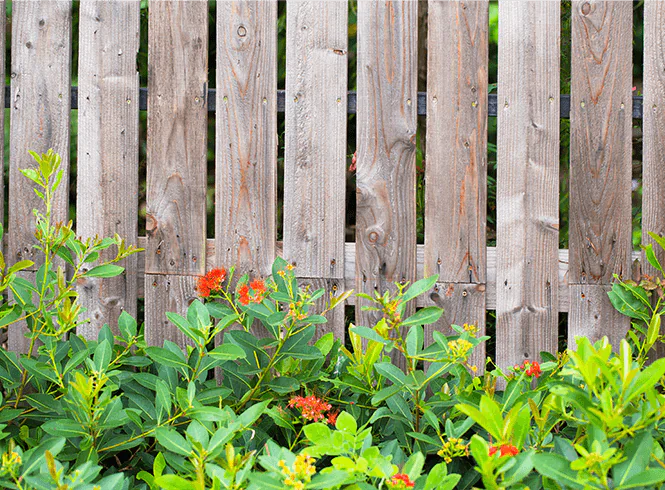
Plants as a Deterrent
Using thorny or dense plants along your garden fence is a natural and effective way to enhance security. Not only do these plants create a physical barrier, but they also make climbing hazardous for potential intruders. Below are some of the most effective options, including their characteristics and benefits:
Plant | Description | Security Benefits | Growth & Maintenance Tips |
Creeping Juniper (‘Blue Rug’) | Low-growing evergreen with blue-green foliage | Thorny stems deter climbing; spreads densely to cover ground under fences | Plant 30–60cm apart; drought-tolerant; prune lightly to maintain coverage |
Blue Spruce | Conical evergreen tree with rigid, spiky needles | Dense branches make climbing difficult; adds height along fences | Plant in well-drained soil; slow growing but long-lasting; prune lower branches to maintain barrier |
Common Holly | Evergreen shrub with dark green, spiked leaves | Sharp leaves prevent intruders from gripping branches; dense foliage reduces visibility | Thrives in sun or partial shade; water regularly in first year; prune to shape and maintain thickness |
Giant Rhubarb | Large-leafed plant with abrasive stems | Huge leaves and thick stems create a natural barrier; difficult to push through | Prefers moist soil; leaves can grow up to 2.5m high; protect crowns in winter |
Firethorn (Pyracantha) | Thorny shrub with dense branches and bright berries | Sharp thorns make climbing painful; branches intertwine to form a strong barrier | Plant in full sun; water regularly until established; can be trained against fences or walls |
Additional Tips for Using Plants as Security Barriers
- Combine Plants with Fences: Thorny or dense plants are most effective when planted directly in front of or along the top of a fence. This creates a dual physical barrier.
- Use Layers: Mix evergreen shrubs with fast-growing climbers to fill gaps and reduce weak points.
- Maintenance for Safety: Keep plants healthy and dense to prevent gaps that intruders could exploit. Prune dead or weak branches promptly.
- Aesthetic & Security Balance: Choose plants that complement your garden while providing security. Many thorny shrubs also have seasonal flowers or berries, improving appearance.
- Avoid Public Hazards: If the plants border a footpath or public access, trim outer branches to avoid injuring passersby.
Why Plants Work for Garden Security
Thorny and dense plants are a passive, low-maintenance security measure that complements fences, gates, and anti-climb solutions. By making entry painful or difficult, they discourage intruders and increase the perceived risk of attempting a break-in.
Smart Garden Security Devices
Modern technology can greatly enhance garden fence security. Adding smart devices creates multiple layers of protection, making your garden less attractive to intruders.
Key Smart Devices:
- Motion-activated lights: Illuminate when movement is detected to deter intruders. Place along fences, gates, and near sheds.
- Smart cameras: Monitor your garden remotely. Many systems send alerts directly to your phone.
- Alarmed gates: Combine with fences to prevent unauthorised entry. Some gates integrate with smart home systems.

Garden Gate & Shed Security
Gates and sheds are often overlooked weak points. Reinforcing them strengthens overall garden security.
Gate Security Tips:
- Use strong locks (padlocks, mortice locks, or digital smart locks)
- Ensure the gate aligns tightly with fence panels to prevent gaps
- Consider reinforced materials such as metal or hardwood for maximum security
Find out more about Garden Gate Security.
Shed Security Tips:
- Lock sheds with high-quality padlocks or internal locking bars
- Install motion-activated lights near sheds
- Avoid storing high-value items in visible areas
Find out more about Garden Shed Security.

Kim is Keytek’s longest-serving security blogger, with nearly a decade of hands-on experience in the security industry. Over the past 9 years, she has built trusted relationships with locksmiths and security professionals across the UK, giving her exclusive insight into the latest trends, technologies, and best practices in home security. From traditional burglary prevention methods to cutting-edge smart home solutions, Kim covers it all. As part of her role, she regularly reviews the newest home security gadgets on the market—including smart doorbells, security cameras, and more—bringing readers honest, practical advice on how to protect their homes. Kim’s passion for security was sparked during her time at the University of Chester, where she learned first-hand how vulnerable student housing can be to break-ins. That early experience inspired a lifelong interest in home protection, eventually leading her to join the team at Keytek. Today, Kim combines her deep industry knowledge with a love for writing to deliver helpful, accessible content for homeowners across the UK. You can read all of her expert advice and top security tips at Keytek.co.uk, where she shares everything from seasonal safety guides to reviews of the best security products on the market.

Find your nearest Locksmith

Frequently Asked Questions
Can I put barbed wire on my fence?
Yes. You can install barbed wire on your property to deter intruders, but you must follow the Occupier’s Liability Act 1984. Always post warning signs and avoid placing wire near public routes to prevent accidents. Barbed wire works best on tall fences and can be combined with anti-climb paint for enhanced security.
Can I use spikes on my fence legally?
Yes, spikes for fences are legal on private property, but they must not pose a hazard to the public. Place spikes on top of fences that are at least 1.8–2m high and use warning signage. Spikes are most effective when combined with a strong fence material like wood, composite, or metal mesh.
What is the best fence for garden security?
The best fence for garden security is tall, sturdy, and difficult to climb. Materials such as galvanised steel, composite, or cedar wood provide strong protection. Adding anti-climb paint, spikes, or thorny plants further improves security and makes your garden less attractive to intruders.
How do I secure a garden gate?
Use strong locks such as padlocks, mortice locks, or digital smart locks. Ensure the gate aligns tightly with fence panels and consider reinforced materials like metal or hardwood. Motion-activated lights near gates also increase visibility and deter potential burglars.
How do I maintain a fence for maximum security?
Regular maintenance is key. Inspect fences seasonally for damage, rot, or rust. Apply protective coatings on wood or bamboo and repair loose panels on metal or composite fences. Maintaining fences in good condition ensures they remain a strong deterrent against intruders.
Is razor wire legal on garden fences?
Yes, razor wire is legal but strictly regulated. It must not create hazards for the public, and warning signs are required. Razor wire is highly effective when installed on top of tall fences or metal mesh panels, especially for properties requiring higher security levels.
Can I install a trellis on a shared fence?
Yes, but you must obtain consent from your neighbour. Trellis can be used to increase privacy and security, especially when combined with thorny climbers or anti-climb measures. Always check that the trellis does not exceed legal height restrictions (usually 2m for rear gardens).
How can I improve fence security without violating planning laws?
You can increase height (within legal limits), use durable materials like wood, metal, or composite, and add deterrents such as thorny plants, anti-climb paint, or spikes. Combining fences with smart devices like motion sensors and security cameras enhances protection while remaining compliant with planning rules.
Can barbed wire or fencing wire be used on a metal mesh fence?
Yes. Barbed wire, fencing wire, or razor wire can be securely installed on top of metal mesh fences to increase security. Ensure proper installation and signage and check local regulations to avoid hazards to the public or neighbours.