The Most Secure Places in The World

Have you ever wondered where the most difficult place in the world to break into is? What buildings contain some of the most rigorous security systems, access control systems, and even their own army to deter any unwanted visitors.
This blog will look at some of the world’s most secure high-security facilities and buildings in 2025, in addition to what makes them so secure.

Vatican Street Archive, Rome, Italy
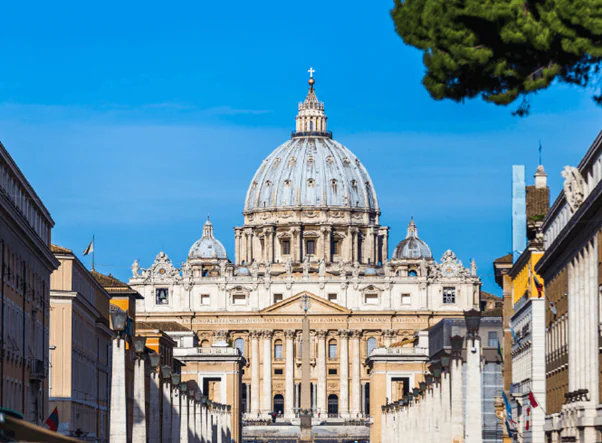
Now renamed Vatican Apostolic Archive, it’s one of the most secretive and enigmatic locations, the Vatican’s Street Archives only has a few numbers of images ever published of what lies inside. Housing some of history’s most precious religious papers with an estimate of 35,000 volumes of papers over a stretch of 53 miles of shelving. Originally meant to be a place for the serving Pope to keep diaries and confidential information, the archives were never meant to be seen by the public.
Access to the archives is forbidden for reporters, students, and amateur historians, and authorization is only granted to academic scholars who must renew their access requests every six months. Access was granted to a select group of reporters in 2010 as the Vatican were unhappy with the portrayal of the archives in the 2008 film Angels and Deamons.
Academics are permitted to access the Vatican at a specific entry point guarded by the Swiss Guard. They are then led into the archives, where they can view up to three previously requested documents every day.
Given that it’s only open to researchers, there are only a few photographs of the 53 kilometres of archive shelving, so your best hope of catching a glimpse of what is inside is in the film Angels & Demons, where the iconic bunker was reconstructed, which as stated before, may not be the most accurate!
Federal Reserve Bank, New York, USA

The gold vault of the New York Federal Reserve Bank is located 80 feet underground of the main office building in Manhattan. The vault, which was built during the building’s construction in the early 1920s, offers account holders a secure facility to store their monetary gold reserves.
The gold held in the Federal Reserve bank, doesn’t belong to them – they store and keep secure the gold for account holders, such as the US and foreign governments as well as official international organizations. Private individuals or private sector companies are allowed to store their gold in the Federal Reserve
The bank currently holds approximately 497,000 gold bars weighing over 6,000 tonnes and can withstand this weight because it’s built on the solid bedrock of Manhattan Island. If you want to go inside, you may take a tour of Wall Street’s most famous bank’s museum and vault.
A robust multilevel security system protects the vault, with a 90-ton steel cylinder guarding the single-entry point and is protected by a multi-step authentication process. The nine-foot-tall cylinder vault is housed within a 140-ton steel-and-concrete frame that forms an airtight and watertight seal when closed. When the vault is closed, four steel rods are placed into holes in the cylinder, and time clocks are activated, effectively locking the vault until the next business day.
Massive steel-reinforced concrete walls surround the vault, and security cameras monitor activities inside and outside the vault 24 hours a day, seven days a week, as well as motion sensors when the vault is closed. The vault control team’s constant surveillance also guarantees that the highest security measures are always followed. To make it that bit harder to break in, the gold is safeguarded by the New York Federal Police’s sophisticated building security system and the armed Federal Reserve police force.
Svalbard Global Seed Vault, Norway

The Svalbard Global Seed Vault is one of the most secure vaults in the world, built to resist an asteroid strike or any nuclear event. The vault contains approximately 1,165,041 variations of seeds in the event of a mass extinction disaster, with the goal of having a spectrum of crop diversity if Earth ever had to rebuild. The vault has a maximum capacity of 4.5 million seed variants!
The Seed vault works the same way as a bank, owned by Norway, other countries make a ‘deposit’ of seeds which only they have right of access to and control of. Any country deposing seeds signs an agreement that the Government of Norway has no right to the genetic resources stored there by the other country. Different countries cannot access each other’s seeds either. There are strict rules surrounding the Seed Vault and they are rigorously enforced.
The seed vault is the ultimate safeguard for the global food supply. It’s kept at a temperature of -18°C in custom-made three-ply foil containers. This reduces metabolic activity and preserves the seeds’ health for a long period of time.
The fact that it’s built 120 metres into a mountain with only a modest entry on the outside before a succession of high-security tunnels and doors is what makes this facility so safe. This is also not a tourist attraction, so you can’t walk inside and see what’s beyond the closed doors. The region near the vaults’ entrance is notorious for being deserted, and they recommend that if you attempt the trek to one of the world’s northernmost inhabited areas, you keep your distance.
Another key problem if you were to try and get into the famous seed vault would be the dangerous climate and wildlife around it. This frozen tundra is prone to massive avalanches, which can be fatal. As well as this, the likelihood of getting frostbite is very high, with all year round having freezing temperatures. On top of how secure this place is, it is surrounded by polar bears, with the government suggesting you don’t hike without a weapon for your own safety. Overall, it’s an ideal location for building a very secure building without having to invest in costly security systems or even signs that state “visitors stay out.”
Fort Knox, Kentucky, United States
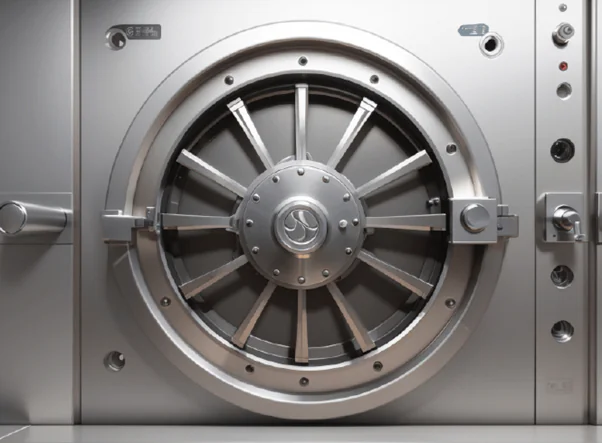
Regarded as the safest spot on the planet, Fort Knox is home to the United States’ bullion vault (known as the United States Bullion Depository) and is in Louisville, Kentucky. This is where the United States keeps most of its gold supply. The vault door, in the core of this seemingly impregnable fortress, is secured using a combination entered by at least ten different staff members, none of whom know more than their own piece of the code. There is an escape tunnel out of the vault, it can only be accessed once the vault is locked and leads to the main lobby of the building, meaning its not very practical if you’re trying to steal anything.
The Fort protects gold rumoured to have a value in the existing gold market of $290 billion. The vault also contains a reserve of drugs and historic documents, including the original copy of the US Constitution’s Declaration of Independence as well as the original draft of Abraham Lincoln’s Gettysburg Address.
The vault itself was made by the Mosler Safe Company, who’s brochure states that the vault and emergency doors are 53cm thick and made of the most drill and torch resistant material (at the time). The main door weighs 18 metric tons and the casing of the vault is 64cm thick.
For security reasons the depository is not open for visitors and is monitored by night vision video cameras and microphones while being guarded by the United States Mint Police. In case of emergency the United States Bullion Depository has its own emergency power supply and water systems, so cutting the power is not an option to potential thieves.
Fort Knox is surrounded by Apache helicopters, gates, guards, tanks, concrete lined granite walls, and hundreds of alarms, so even getting close to Fort Knox is a challenge, especially given that the entire fort is encircled by a US military base home to 40,000 soldiers. To further secure Fort Knox, it is believed that the grounds are surrounded by land mines, electric fences, radar sensors, laser-triggered machine guns, as well as its own power plant and water supply, so any effort to break in will be promptly shut down and usually result in serious consequences. In fact, no one has managed to break in before because no one has ever even attempted it, and its safe to say we don’t recommend it.
Area 51, Nevada, United States
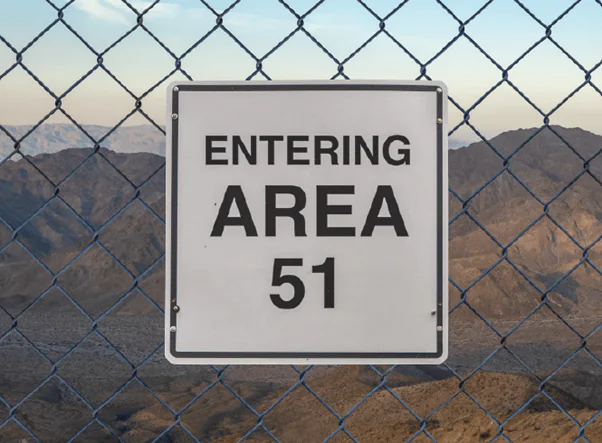
You’ve probably heard at least one conspiracy theory about Area 51. The near-mythical US military research complex in the Nevada desert is guarded by motion sensors, armed guards, and a no-fly zone that extends across the whole site, making it one of the safest places on the planet. Many believe most of the facilities in Area 51 are underground. The fact we can’t see them, don’t know if they are real and therefore don’t know where the entrance is, makes it one hard place to break into.
Area 51 is a high-security military research facility renowned for storing some of the world’s biggest secrets and coverups, the US government even denied the existence of Area 51 until 2013. Many conspiracy theorists believe it is also famous for concealing information about aliens and UFO encounters. It has become so secretive about what happens on this site since it was constructed during the Cold War that it has only just become visible on satellite images.
The 1,500 personnel are unable to travel by car and instead will board a private aircraft from a special terminal at McCarran International Airport in Las Vegas, flying under the name “Janet Airlines,” with air traffic control referring to the airport as “somewhere.” The fact that Area 51 is so classified for what seems to be a US Air Force testing facility adds to the scepticism. The whole area is a no-fly zone for commercial and private aircraft, if any unauthorised aircraft do enter the area 51 airspace, then they will be intercepted by military jets and face severe legal consequences.
Even though Area 51 comprises 38,400 acres, the large expanse of open land is patrolled with armed guards and motion sensors that can discern the difference between human and animal activity, so there is no place to hide for any trespassers.
The White House, Washington DC, United States

The White House, where the President of the United States lives and works is one of the most secure structures in the world. The first line of defence for the White House is a very robust iron fence that provides the White House with excellent perimeter protection. Updated in 2021, the 13 foot reinforced steel fence has anti-climb and anti-ramming features, the fence has deep concrete foots that stop vehicles and any explosions from knocking them down. Alarms, security cameras and infrared sensors use facial recognition and track movement to identify intruders, further securing these barriers. It’s then backed up by security stations with bulletproof glass. The roof is continually manned by a crew of some of the world’s most highly trained snipers. The building houses around 1,200 informed secret service operatives, meaning that the White House has a private security force of some of the world’s most trained bodyguards.
Unlike some of the other buildings on our list, you may enter the White House and go on a tour, but you must book at least 21 days in advance to give time for background checks to be made on all guests. The White House also has a no-fly zone within a 15-mile radius, and the city of Washington has surface-to-air missiles strategically placed across the city to intercept any unauthorised aircraft.
The White House also contains a “situation room,” which has appeared in a number of films. Even in the case of a nuclear explosion, activities would be able to continue in this underground bunker. The bunker is also said to include a network of underground tunnels that may be used to escape the house in the event of an emergency. Seeing as it needs to keep the leader of the free world safe, there are several security measures to get through before entering the Situation Room. First, its heavily guarded, so you’re not getting near it if you’re not authorised. There’s then a layer of biometric authentication that includes facial recognition, fingerprint scans and personalized access codes. There are also no unauthorised electronic devices allowed, such as personal laptops and mobile phones.
Despite being known as the headquarters of the United States, it is the Pentagon, which is the United States Department of Defence. This is the headquarters for all three-armed services, including the United States Army, Navy, and Air Force.
The Korean Demilitarized Zone (DMZ)

The Korean Demilitarised Zone, which runs along the border between North and South Korea, is next on the list. The strip of land is 250 kilometres long and 2 km wide, forming a harsh, strongly militarised border line that serves as a buffer zone due to the continuous conflict between North and South Korea.
The North Korean Security Measures
There is a huge military presence with several hundred thousand troops being stationed at the DMZ. All soldiers there are well armed and are subject to intense ideological and combat training. There are several watchtowers manned by troops with high-powered binoculars, infrared sensors and motion detecting cameras.
You will also find landmines, barbed wire fences and electric barriers on the North Korean side. They are also rumoured to have hidden artillery bases and rocket launchers that are to be used for rapid retaliation.
South Korean Security Measures
South Korea is said to have around 600,000 troops stationed on their side of the DMZ along with 28,500 US troops also stationed there, although they are more used as a deterrent than for actual force. The South Koreans also use AI technology to defend their side of the DMZ alongside unmanned surveillance drones and high tech sensors.
Some consider the DMZ to be one of the most dangerous and secure areas on Earth. Following the civil war, the nations signed the Armistice Agreement in 1953, which established the DMZ. Each nation agreed to deploy their military 1.2 miles back from the front line and construct a 2.5-mile-wide buffer zone.
The stretch of land is one of the most heavily guarded in the world. The perimeter protection, which is littered with explosives and electrified barbed wire fences, makes it nightmarishly difficult to cross. Thousands of security cameras also line the DMZ border, allowing no blind spots for defectors seeking to flee. To make it even more secure, soldiers will shoot on sight if they notice anyone trying to flee into the DMZ zone, which can be a common occurrence with many North Koreans fleeing the country in search of freedom in South Korea.
Every year, approximately 1,000 North Koreans flee to the South. If successful in their defection, the majority are screened for being potential spies at an immigration facility before being placed in a state resettlement programme before being granted freedom as a South Korean citizen. Even though many have accomplished the journey, it can be costly. In 2017, a North Korean soldier was injured by his own troops while attempting to cross the DMZ. He was shot at 40 times and hit five times, but he survived and was discovered under a mound of leaves. However, if you are caught, defendants may be interrogated, sentenced to long years in labour camps, or even killed.

Max Kelly
Max is a home security how-to expert with extensive knowledge of securing doors, windows, and entire properties. With years of experience in the field, he specialises in easy-to-follow DIY solutions for common security issues. His practical, step-by-step guides empower homeowners to strengthen their safety measures with confidence and ease.