Rim Cylinder Vs Euro Cylinder Vs Oval: What’s the Difference?

When it comes to securing your home, the type of cylinder lock you choose can make a difference in both safety and convenience. Whether you’re upgrading a front door lock, adding extra security to an internal door, or replacing a worn-out cylinder, understanding your options is essential for making the right choice.
What is a Cylinder Lock?
Cylinder locks are the part of the lock where you insert the key, and come in several types, each suited to different doors and levels of security.
Rim Cylinder
Rim cylinders are installed on the exterior surface of the door and are often used in conjunction with locks such as a night latch (also known as a Yale lock).
Often, they use a pin and tumbler to provide security. The key must match the specific pin arrangement to unlock the cylinder, engaging the locking mechanism from the outside.
Pros:
- Installing a rim lock on timber or wood doors is relatively easy due to drilling into the material of the door.
- Rim cylinders are generally affordable, easy to install, and available in styles that complement your door and hardware. They are ideal for internal doors that require increased security.
Cons:
- However, rim cylinders typically offer a lower level of security—especially models that do not meet British Standard (BS) specifications. These can be more vulnerable to forced entry, particularly on doors with handles or doorknobs.
Euro Cylinder
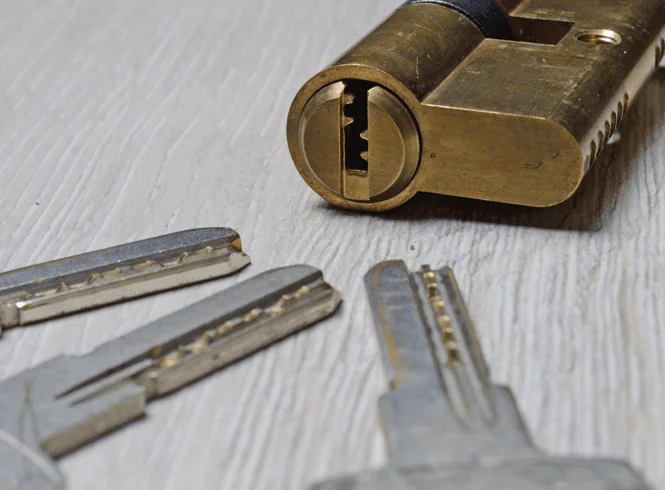
Also known as a euro lock barrel or euro profile cylinder, a euro cylinder is a pin tumbler lock with a cylindrical profile with pins that move once a key is inserted. They rely on a pin-tumbler, where pins vary in length within the cylinder. Turning the key allows the mechanism to be engaged or disengaged.
Pros:
- Euro cylinder locks are versatile and installed on a wide variety of internal and external doors, including uPVC, wooden, composite, aluminium, and steel doors. The length of the cylinder will depend on the thickness of the door.
- The cylinders vary in security levels, including anti-picking, anti-bump, anti-drill, and pull-resistant reinforcements to resist brute force attacks.
- They are easy to install and replace and practical for internal and external doors.
- Many are BS-approved and meet the requirement to help lower insurance premiums; they often have thumb turns offering a quick way to lock and unlock the door.
- They are ideal for commercial properties as the cylinders allow for a master key.
Cons
- High-security cylinders with anti-snap models and anti-bump features can be more expensive.
- A standard euro cylinder is more vulnerable to picking and techniques like lock bumping – some are not insurance-approved and may not have the required security features.
- With small internal components, if not properly maintained or installed euro cylinders are prone to breakages and more vulnerable to burglary attempts; this includes older models.
Oval Cylinder
An oval cylinder is a cylinder lock with an oval-shaped profile, often designed to be used with oval-shaped mortice lock cases. Providing a consistent locking mechanism that is suitable for apartment buildings or office complexes.
The cylinder plug operates with a rotating cam; the cam rotates with the insertion of the key. Turning the key then interacts with the bolt mechanism within the lock case, either to push the bolt to lock or unlock the door.
Pros
- Commonly used on wood, uPVC, and aluminium doors, these high-security cylinders are commonly on residential and commercial properties.
- Oval cylinders offer a high level of security and security features such as pick resistance, drill resistance, and key control—like euro cylinders.
- This kind of lock is ideal for outdoor use as it can withstand harsh weather conditions.
- Compatible with existing lock cases, easy to replace, offering flexibility when upgrades or changes are needed.
Cons
- It’s hard to find replacement parts for them in specific configurations as they are not as widely available. Due to a lower demand and more complex malfunctions, they also tend to be more expensive.
- In some cases, oval cylinders are considered less secure than their euro cylinder counterparts.
Keytek Locksmiths
At Keytek® Locksmiths, we bring years of expertise in all types of locks to every job. Our experienced Locksmiths deliver reliable, high-quality service tailored to your individual needs. Whether you have just moved home or are thinking of upgrading your locks, our team is here to help. We are committed to your security, offering British Standard high-security locks for added peace of mind.
If you need a locksmith, don’t hesitate to give us a call or request a callback – we’re here to help!

Jim Lockwood
Jim Lockwood is a fully qualified locksmith with over 10 years of hands-on experience in domestic, commercial, and emergency locksmith services across the UK. Holding a Level 4 NCFE Locksmithing accreditation—Jim is a trusted authority in lock security, key systems, and burglary prevention.
As Keytek’s lead technical content specialist, Jim draws on real-world experience to create detailed, trustworthy resources that help homeowners, tenants, and professionals make informed decisions about their security. From guiding readers through emergency lockout procedures to explaining locksmith pricing, his content combines expert knowledge with practical, easy-to-follow advice.
Throughout his career, Jim has tackled a wide range of locksmithing scenarios—including uPVC door lock failures, snapped keys in locks, and high-security upgrades and remains actively engaged in the locksmith industry, staying up to date on emerging technologies, British Standards, and security legislation. This ensures that every guide, article, and tutorial he authors is not only accurate and actionable but also aligned with the latest best practices.