
How to Lock Door Without a Key
In a Hurry? Here's the Key Info
- Wedge: Blocks door from inside; short-term only.
- Door Bull: Protects frame from forced entry; quick install.
- Portable Door Lock: Steel insert for strike plate; temporary solution.
- Door Chain: Restricts door opening; short-term use.
- DIY (Fork/Chair): Can block door but may damage lock; not recommended.
- Best Practice: Call a locksmith to repair or replace locks for full security.
How to Lock Door Without a Key
You may find yourself in a situation where you have lost your keys or your lock has broken but you still want to be able to lock door without key. Whilst it will be hard to secure your door from the outside, there are different ways you can lock door without key while you’re still in the house.
So, are you asking how to lock door from inside without key? Keep reading to find out how to lock door without lock, and what can you do to secure your home without a key.
How to Lock a Door from the Inside
Finding yourself unable to lock your door from the inside can be a daunting prospect, especially if this is during the evening. Of course, the most secure way to resolve this is to call an emergency locksmith, but if you are in a tight spot or unable to get someone out, some of the tips below can be a temporary solution.
Use a Wedge
Not only is it one of the easiest methods to use to lock door without key, but also one of the cheapest, which is why it’s a good method to try. You simply place a wedge under the door from the inside which then restricts the door’s movement. Very simple to set up and it works great to block your doors from being opened, however, it won’t work long term and if someone makes repeated attempts to get in then it will likely fail.
If you are looking for a higher security option, get a hard wedge with an alarm, which will provide a loud siren in case of a break-in.
Install a Door Bull
The Door Bull is a device designed by a group of ex-police officers who saw too many break-ins. They wanted to give people a way to protect themselves from forcible entry. Your lock can be rendered useless as when a burglar forces entry, the doorframe is likely to break first. This device works by distributing the force when your doorframe experiences a force such as a kick, meaning it shouldn’t break. It does require some installation but this is simple and should only take 10-15 minutes.
Buy a Portable Door Lock
A portable door lock can be very handy if you have lost your keys and need to lock your door. A portable lock consists of a steel piece that is inserted into the door strike, then secured into place with a handle which then restricts the door from opening. It’s a great short-term solution but you should always look to get your locks repaired by a local Locksmith to ensure that your home remains secure.
Install a Door Chain
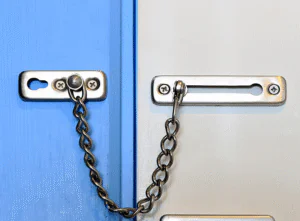
Door chains are a great way to lock your door without a key, and what’s even better is that it’s often not uncommon to see these already fitted to doors for additional home security. These door chains don’t stop the door from being opened but rather restrict it once opened. This is a great way to secure your door for a single evening or whilst you get your lock or door repaired but is not a great long-term solution.
Use a Fork
As weird as it sounds, you could use a fork to lock your door and keep intruders out! To begin, this DIY method needs some DIY skills on the fork itself. What you need to do is to slightly bend the end of your fork, then you need to cut the fork’s handle (be careful as it could be very sharpened and can cause injury). The idea is that you insert the prong end into the locks strike plate, then place the handle between the prongs, which keeps the handle from slipping.
We don’t recommend this method as you are likely to cause damage to your door lock even further which can be more costly for you to get amended.
Use a Chair
A method that we’ve probably all seen a lot on TV is using a chair under the door handle to prevent someone from opening the door. However, you’d have to secure the chair correctly to get the full security benefits.
- Take into consideration if it works on the lever and not a knob door
- It’s better to consider using an easily adjustable chair, such as an office chair, so you can adjust it to the right height.
- Use anything that is solid enough to raise your chair if it is a non-adjustable one.
Method | Security Level | Cost | Tenant Friendly? |
Wedge | Low | £3 - £15 | Yes |
Door Bull | Medium- High | £30-£123 (depending on model) | Yes with permission - it requires a screw into frame. |
Portable Lock | Low- Medium | £4 - £25 | Yes |
Door Chain | Low | £3-£12 standard if DIY fitting. Up to £55 for high security. | Yes with permission - it requires screws into frame and door. |
Fork | Low | £0 – already in home | Yes |
Chair | Low | £0 – already in home | Yes |
How to Lock a Door Without a Key from the Outside
Finding out you’ve lost your key when you are heading out is extremely frustrating. Our expert advice would always be to call a locksmith to replace your lock straight away, and then look at solutions to help prevent these occurrences in the future.
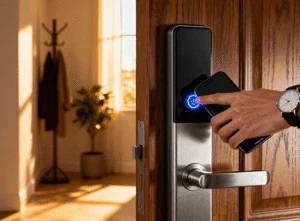
Keyless Smart Lock
A great way to prevent occurrences of lost keys is to think about a keyless smart lock. This solution completely removes the need for a key, a generally works with an app on your mobile or a keycard. Of course, you could still find yourself in a pickle if you don’t have your phone or keycard on you, however some models also come with pin codes and a Digilock option.
Hasp & Staple + Padlock
This example would not be recommended, but you could also consider securing your door with a hasp and staple and a high security padlock if you really had no other option. This type of security solution is really only ever used on something like a shed or a gate, as if you were to add this to your front door, you could damage the frame as you could have to fix this directly to the door and frame. You would also not be able to exit from the inside, so would pose a fire and security risk.
How to Lock a Door with No Lock
The only option here is to call a Locksmith to fit a new lock. The type of lock you need will depend on your door, how it opens and the level of security you require. A Locksmith can assess your door and recommend the most suitable option.
Some common options include:
- Mortice lock: Often fitted to wooden doors, a mortice lock sits within the door itself and is operated using a key. A five-lever mortice deadlock that meets BS3621 may be a suitable option for an external wooden door, depending on your insurance requirements.
- Nightlatch: Commonly known as a Yale lock, a nightlatch is fitted to the inside surface of a door and can automatically latch shut when the door closes. Some models can be deadlocked using a key for additional security.
- Euro cylinder lock: Commonly found on uPVC and composite doors, euro cylinders are often part of a multipoint locking system. A Locksmith can check whether your door needs a new cylinder or a more extensive repair.
- Multipoint locking system: Frequently fitted to uPVC, composite and some aluminium doors, this system secures the door at several points along the frame when operated correctly.
How much does it cost to fit a lock?
The cost of fitting a new door lock will depend on the type of lock, the door it is being fitted to and whether any additional work is required. For example, replacing a standard cylinder is generally less expensive than installing a completely new locking mechanism.
As a general guide, a standard lock replacement may cost from around £150, whilst more complex installations or higher-security options can cost more. Emergency appointments and out-of-hours work may also affect the final price.
For an accurate quote, it is best to speak to a professional Locksmith who can assess your door and explain your options.
What if Someone else has a Key?
If someone else has a key to your home, you may be wondering whether your property is still secure. Whilst your door may lock normally, you cannot be certain that nobody else can gain access if they have a working key.
This could be a concern if you have recently moved house, lost a set of keys, had a key stolen or are unsure whether a previous tenant or another person still has a copy.
Unless the person with a key is a family member or friend you have trusted the key to yourself, we’d always recommended changing the locks.
How to Lock a Door with a Key
Knowing how to lock a door correctly is an important part of keeping your home secure. The process will depend on the type of door and lock you have fitted, as some lock automatically whilst others require a key or handle to engage the locking mechanism.
How to Lock a Wooden Door
Wooden doors commonly use mortice locks, nightlatches or a combination of both. A mortice lock sits within the door and is operated using a key. To lock it, close the door fully and turn the key until the bolt engages with the frame.
A nightlatch is fitted to the surface of the door and may lock automatically when the door closes. Some models also have a deadlocking function, which can be operated with a key for additional security. Always follow the manufacturer’s instructions to ensure the lock is secured correctly.
How to Lock a uPVC or Composite Door
Many uPVC and composite doors use a multipoint locking system, which secures the door at several points along the frame. On many models, you need to close the door fully, lift the handle to engage the locking points and then turn the key to lock the mechanism.
The exact process depends on your door’s locking system, so check the manufacturer’s instructions if you are unsure. Never force a stiff handle or key, as this could indicate a fault with the mechanism.
How to Make Sure Your Door Is Locked Properly
Regardless of the type of lock you have, there are a few simple checks you can carry out to help keep your home secure:
- Close the door fully: Ensure the door sits correctly against the frame before locking it.
- Check the mechanism: Make sure you have followed the correct locking procedure, including turning the key or lifting the handle where required.
- Test the door gently: Try the handle to check that the door is secure without forcing it.
- Look for faults: If the key sticks, the handle feels stiff or the door will not lock properly, contact a professional Locksmith for advice.
- Check other entry points: Remember to secure your other external doors and accessible windows before leaving home.
For external wooden doors, it is also worth checking whether your lock meets your home insurance requirements. A suitable lock that meets the relevant British Standard may be recommended.
If you are unsure whether your door locks correctly, a professional Locksmith can inspect the mechanism and recommend any necessary repairs or replacements. Taking a few moments to check your locks can help improve your home’s overall security.
At Keytek® Locksmiths, we are committed to assisting you in keeping your house secure, which is why we are always upgrading the security content on our website. If you were interested in this guide, we recommend that you take a look at our Home Security Guide, where we break down home security into sections like your front door, garden gate, outdoor lights and more.
If you are in need of a locksmith, then you will be able to find a local engineer on our Find a Locksmith Page.
- 10 Best Burglar Deterrents UK (Ranked By Locksmiths)
- 25 Home Security Ideas UK: Cheap to Serious, Ranked by Locksmiths
- Beach Hut Security Tips
- British Standard Locks Explained: BS3621, BS8621, BS10621 & TS007
- Is WD40 Safe for Door Locks?
- Our Guide to Festival Security
- Should I Lock My Door at Night?
- Summer Home Security Guide
- What Is Cylinder Snapping and How to Prevent It?
- What Is Distraction Burglary and How to Prevent It?
- Winter Security Tips: Protect Your Home in the Dark Months

Find your nearest Locksmith